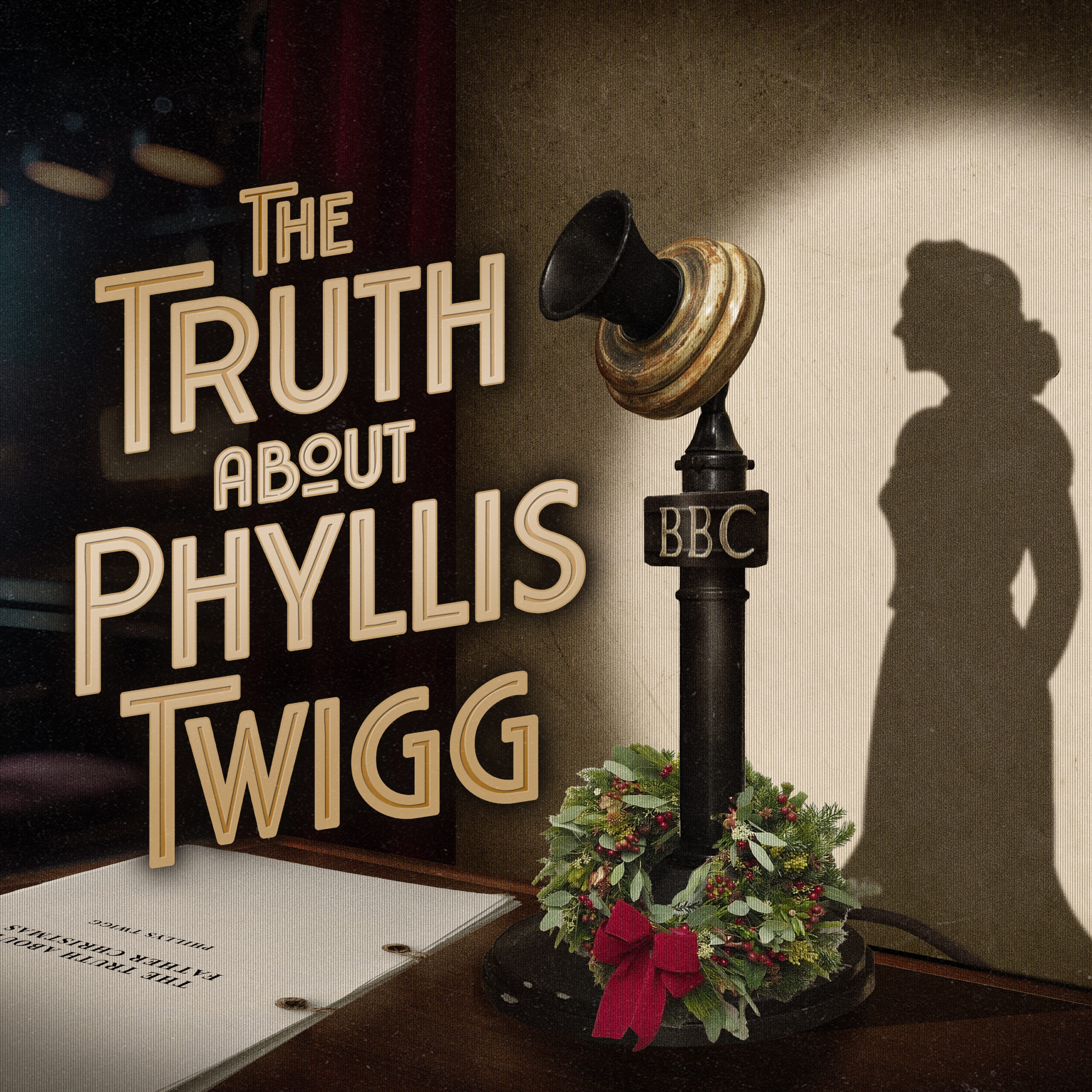
The Truth About The Truth About Phyllis Twigg
Radio dramatist Paul Kerensa on how he brought the first radio dramatist out of the archives and back onto the air.
‘Is there a radio producer in the house?’
It’s not as traditional as a request for a doctor, but this was a historical emergency.
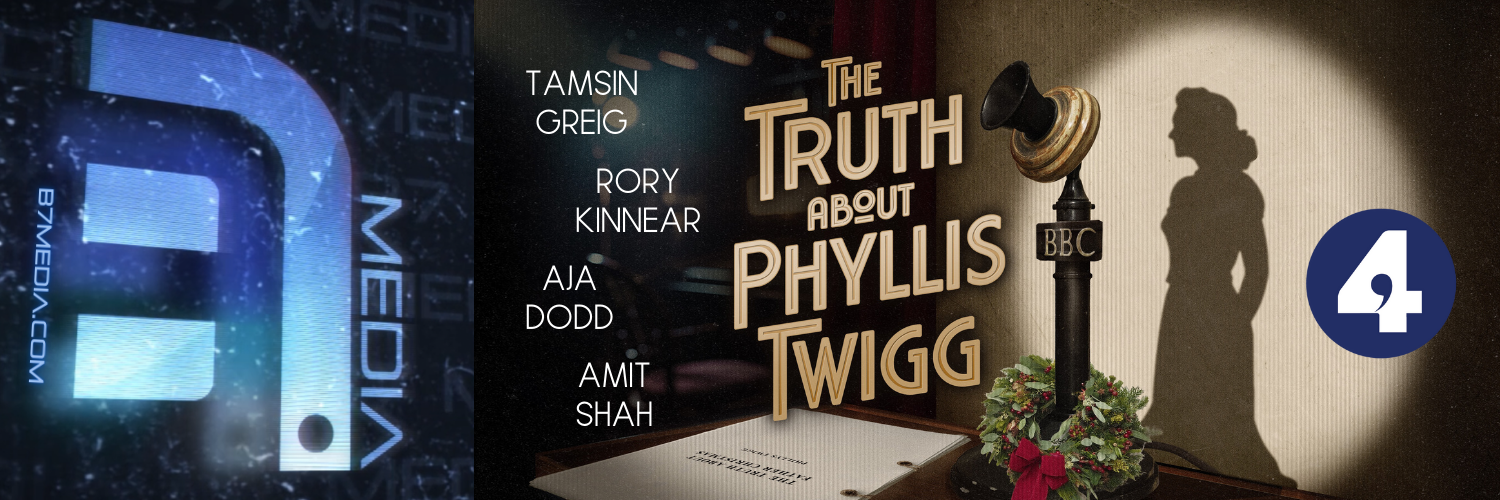
Chelmsford Calling…
I was performing my nerdy stand-up history show in Chelmsford, birthplace of radio – an appropriate location, given that the show was all about the birth of radio.
I had told the audience how Marconi found his base in Chelmsford (I felt like I was mansplaining a bit, as the front row consisted of several Marconi historians), how the BBC idea grew out of the Marconi Company’s wireless aspirations, and how some of the first firsts of broadcasting have gone under-appreciated. Quite a few of them by women.
From Britain’s first DJ Gertrude Donisthorpe (Worcester, 1917, playing gramophone records to an audience of one, her husband) to BBC’s first original comedian (Helena Millais) to its on-air celebrity (José Collins) to its first children’s presenter (Miss A Bennie), there seem to especially be lots of forgotten females.
Some of these names are alas just one-sentence facts – trivia cul-de-sacs, as there isn’t much else we know about Miss Bennie, for example. She read stories for the Manchester station’s Children’s Corner, was nicknamed ‘the Lady of the Magic Carpet’, then went back to teaching a few weeks later. But when we got to the forgotten first dramatist Phyllis Twigg, I felt there was more of a tale to tell.
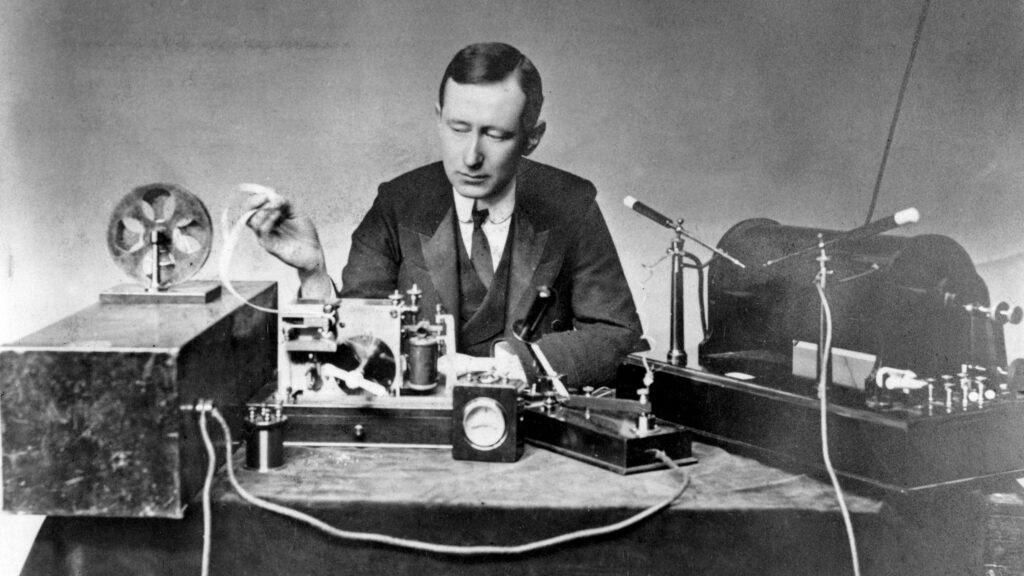
Phyllis Twigg: First Radio Dramatist
Some history books have overlooked poor Phyllis, in favour of 1924 writer Richard Hughes. One book even says: ‘Setting aside The Truth About Father Christmas on 24 December 1922…’ then proceeds to crown Hughes as first instead. Admittedly, his radio play A Comedy of Danger was very notable, as Britain’s first original radio drama for an adult audience. But ‘setting aside’ Phyllis and her achievement?
How about we don’t set her aside? How about we don’t overlook her just because she was female and wrote for children?
I explained onstage that the BBC’s first voice Arthur Burrows later reminisced about Twigg’s drama having a cast, including children, as well as sound effects and music. This was no reading. It was perhaps the world’s most ambitious broadcast to date. Unfortunately for about a century we’ve not known the plot, as there’s neither a recording nor a surviving script.
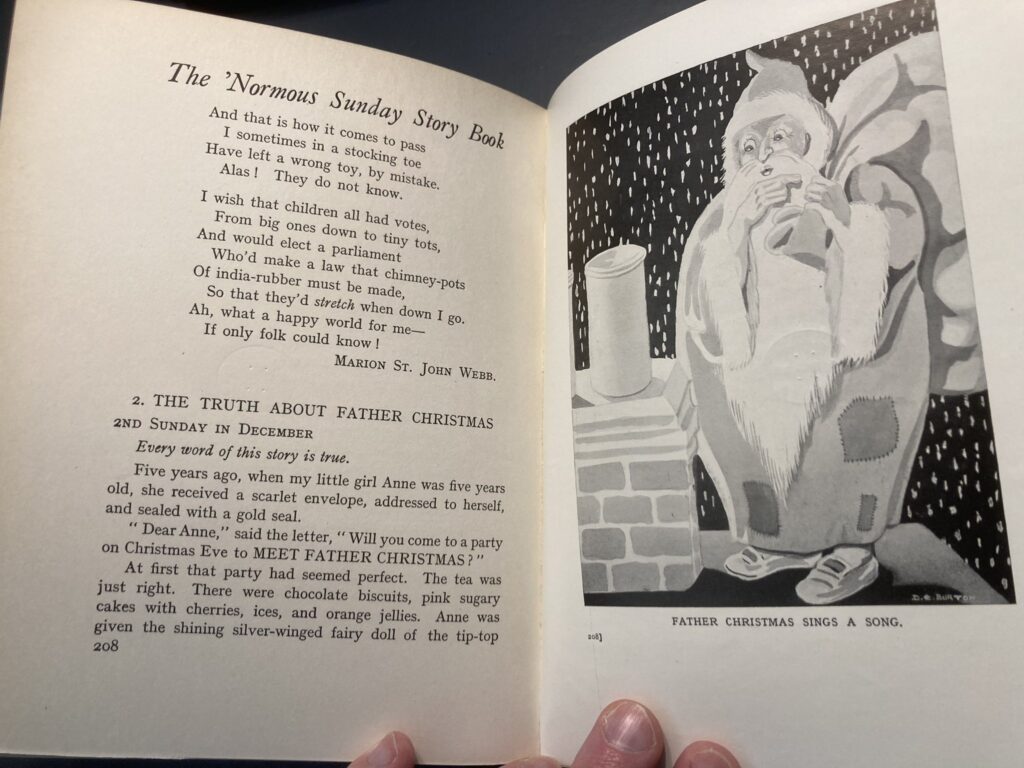
I told the Chelmsford ‘crowd’ (three’s a crowd, right?) that I had news. After discovering her pseudonym of Moira Meighn (via some further historical misogyny; the one helpful newspaper article referred to her via her husband’s initials, ‘Mrs G.W. Twigg’), I found a short story version of The Truth About Father Christmas. Not a script, but prose – but same author, same title. Surely then we could retroactively adapt this story back into a script again? Perhaps convince the BBC to broadcast it?
So my cry of ‘Is there a radio producer in the house?’ was in the hope of helping elevate and amplify Phyllis’ achievements a little more, now we had a little more to work with.
Gladly, there was. Chelmsford resident, voice artist and radio producer Helen Quigley of B7 Media. We chatted after the show, after I apologised to Chelmsford’s Marconi historians for whatever I got wrong. And the pitching process began.
What did Radio 4 want?
Radio 4 was our clear goal. The route to Britain’s biggest speech station is via their Commissioning Editor for Drama and Fiction. Helen and B7 Media’s Andrew Mark Sewell expertly helmed and navigated the process, which meant gently nudging our original pitch to be more in line with what the Commissioning Editor was after. And as the name suggests, fiction was part of that.
We knew early on that we’d have to wear our history lightly, fictionalising where needed, to tell the best tale. Through a couple of decades of comedy writing (Miranda, Not Going Out, The Now Show, The News Quiz etc), I’ve always been eager to put entertainment first. Any message has to be secondary, whether it’s preaching about politics or historical edutainment. This couldn’t be a fact-fest.
I had to separate out two sides of me: radio historian and scriptwriter. The historian half would bite his lip, wanting accuracy at all costs. But the scriptwriter half (often reminded by Helen the director) would argue back that facts would have to be bendy. We weren’t making a documentary, or even a docudrama. Radio 4 were clear that they wanted an entertaining drama – not a history lesson.
That said, I knew certain facts might help the story – I’d just have to pick the ones that made it better. Arthur Burrows, first voice of the BBC, speed-walking from office to studio on a diet of beer and meringues because he didn’t have time for anything else? A nice dynamic detail, I figured. We’d get the soundscape of a 1920s London street, a quick sense of how rushed this chap was, and director Helen would have to make Rory Kinnear eat half a dozen meringues in the studio (and she did – she recalls her initial phone call with Rory asking if he had any issue with meringues and he replied “they make up the majority of my dessert-based meals.”)
Grounded in the Present
The Drama Commissioner was also clear that she wanted something grounded in the present day. This felt like a good instinct. I’ve heard numerous dramas about historical events, and they can feel distant at times. A split timeline was a little more complex to plot, but helped give it some immediacy and relatability, as well as keeping the pace up, as we’d have to switch between scenes. I enjoyed the task too of trying to match the mood between timelines. If Phyllis was frustrated in a 1922 scene, could our 2025 character be frustrated too?
So who was our 2025 character then? With some resistance (I was cautious about writing myself into it), our way in was a present-day podcaster and researcher, trying to find the truth about Phyllis Twigg. Essentially it was the journey I’d been on: searching online for this woman who wrote one radio play then seemed to vanish, making breakthroughs in the newspaper archive, devouring books at the British Library, making muted exclamations of joy in the Humanities 2 reading room, and trying to bring all of this to a podcast.
I was convinced to write this character by two things. Firstly, by making her female, it not only distanced the character from me, but could also demonstrate that some of this historical misogyny sadly isn’t so historical. There are elements of others in this character too – I’m sure there’s some of director Helen there, and her experiences in the industry. Phyllis Twigg’s own great-granddaughter Carina has been found heaps more in the archive as she writes a biography of her. And various radio history academics can also have a share of this character. It takes a village, so there’s a bit of all of that village of researchers in our present-day podcaster character.
The Cast
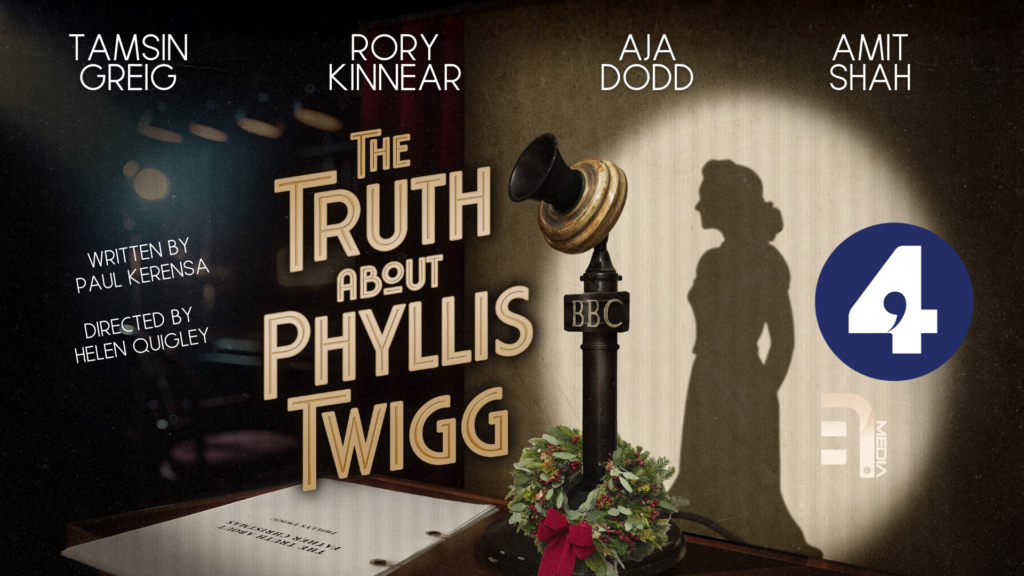
Our podcaster Jenny is brilliantly played by Aja Dodd, an actor and journalist from the north-east, with a nice impatient tone at wanting to get the job done. Amit Shah is an excellent foil as her grumpy producer – even grumpier thanks to the Christmas rush tightening his deadlines.
Our 1920s leads are the superb Tamsin Greig as Phyllis Twigg and Rory Kinnear as Arthur Burrows. It’s rare you get your first choices, but this has been a rare project. Tamsin came to mind as she happened to introduce an radio acting award at a ceremony by shouting out Phyllis Twigg (I think it was written for her, as she has no memory of it, but it made us think she’d be ideal to play the title role).
Rory was my ideal casting for Arthur Burrows back when I was developing a TV drama about the BBC origin story. Burrows feels to me like a man on a mission, with a sense of true north, if only others would let him get there. Rory is excellent at playing such characters – well he’s excellent at playing any character, so we were over the moon that he was available.
The 1922 cast is rounded out with a marvellous performance from Will Harrison Wallace, a seasoned voice and stage actor who found new humour in our naysaying engineer Mr White. RH White (nothing to do with the lemonade company) was a real person – and a bit like that first children’s presenter Miss Bennie, we know so little about him, I can’t even track down his first name. I can tell you this though: White was one of the first four people to be offered a job at the BBC, but only lasted a day before returning to his safer job at the Marconi Company. This broadcasting experiment was going nowhere… Some nice historical antagonism that Will wore well, plus some extra fictitious fun we added, by having him obsess about making the sound of thunder with a sheet of metal (which sadly he never got to use).
Haydn Watts was a great Lift Boy, and as we ran out of budget/cast (and too many voices can spoil the broth), it was a fun challenge to feature Phyllis Twigg’s doctor husband by his absence. Silence and the odd grunt is all he gives her – for which apologies to today’s Twigg family, as I know this wasn’t quite the case. While he may have been remote and removed, I’m sure he wasn’t quite as quiet as we had him. But it tells an interesting tale.
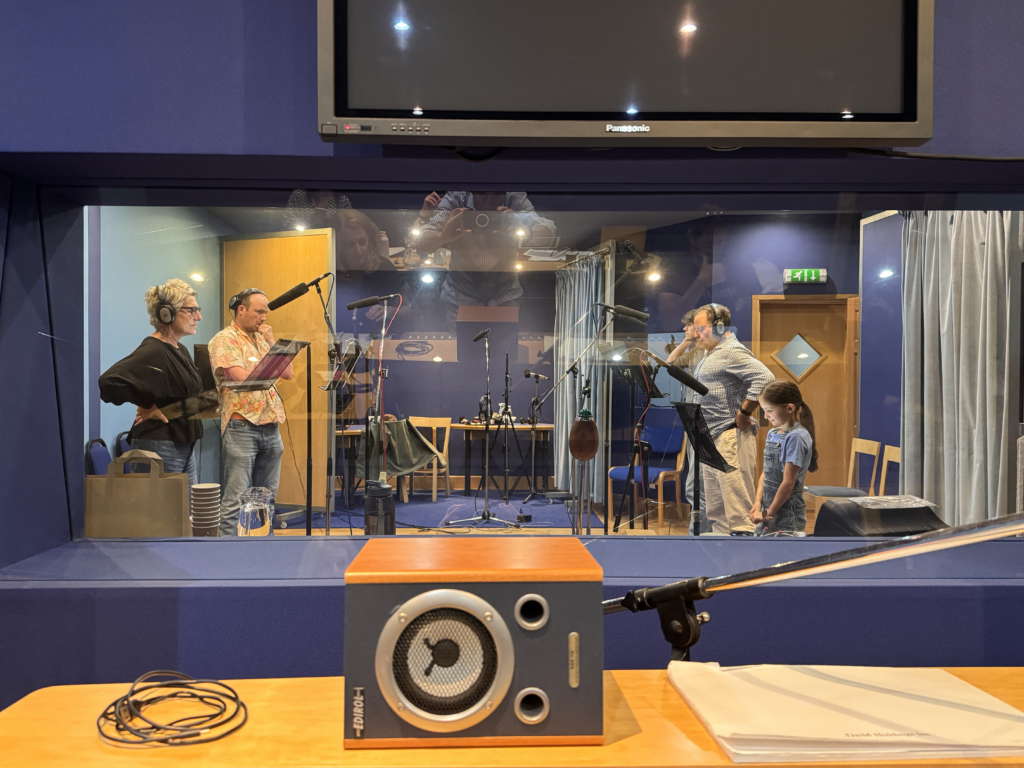
Finally I must mention who plays Phyllis’ young daughter Anne Twigg – a real-life person who grew up to be one of the first television actresses (she was the first to play Anne Boleyn on-screen, and one 1937 magazine noted that she was the first on TV to be seen with her own head under her arm!). I ummed and ahhed about writing in this seven-year-old – not a character one should add to a drama without careful thought. But Anne is a key part of the story, a huge factor in how and why that first radio drama came to be, and she would bring a nice different voice to the scenes. So the part went to eight-year-old Flora Saner, playing her own great-grandmother. Yes, Flora is Phyllis Twigg’s great-great-granddaughter. Her presence was a helpful reminder to the cast, I think, that we were recording a true story.
The Crew
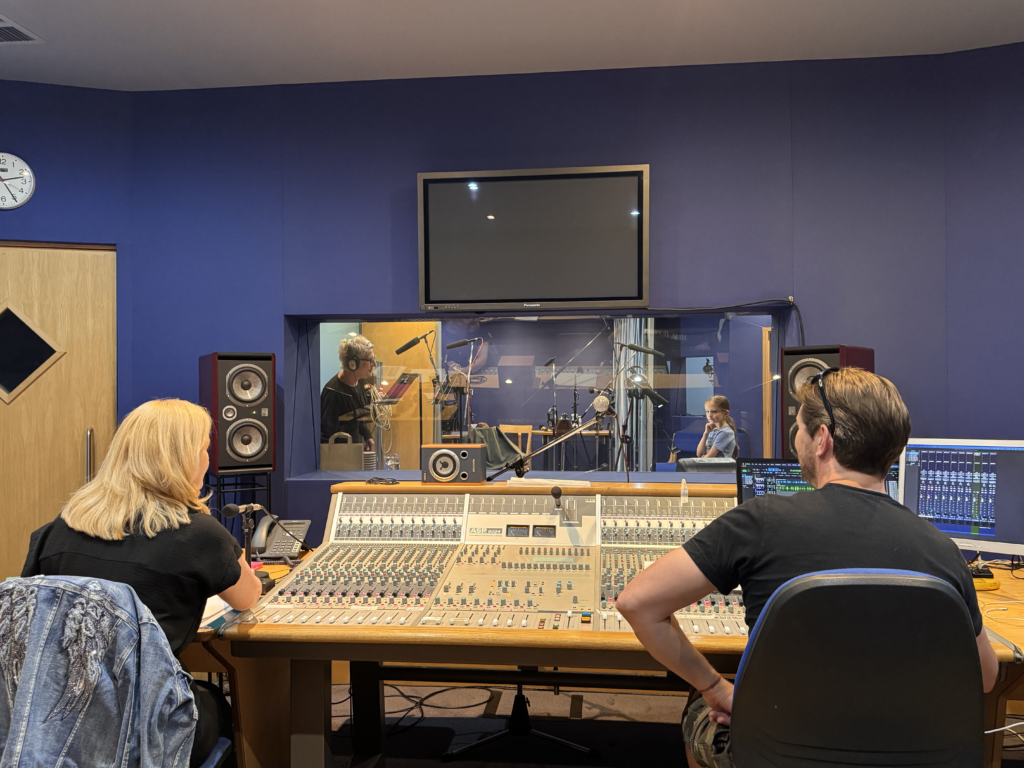
The off-mic crew all brought their own brilliance. Helen Quigley was an exemplary director, bringing out quirks and dynamics that I’d not spotted were there, as well as chivvying me in the right direction while writing. As producer, Andrew Mark Sewell has had our back throughout and helped sculpt it from first pitch to final edit. Studio Manager Rohan Onraet was fab on the recording days, as were all at the mighty Soundhouse Studios.
Composer Neil Brand is an expert in period music, and after asking ‘Could we get someone like Neil Brand?’ I was delighted when we just asked the actual Neil Brand. We also have an original seasonal song in a coffee shop scene, ‘Dear Santa’ by wonderful singer-songwriter Hannah Brine. I’m most grateful to her, and hope to hear it in actual coffee shops.
Eloise Whitmore’s sound design is gorgeous and detailed, from the sounds of microphones to the London streets of a hundred years ago. I didn’t make it easy for her, with different microphones from 1922 and 2025, wobbly phone calls back then and voice memos now. It was a deliberate choice to try to show how technology has changed, though stayed the same.
Nothing but the Truth
From meringues to descendants of the title character, we’ve included plenty of truth in this tale. But thanks to the shepherding of Helen and Andrew at B7 Media, as well as the trust from Radio 4 and the Twigg family, I hope we’ve also embellished just enough to present the emotional truth of the tale in a fun and accessible way.
The truth will out, and credit is given where it’s due – even if it’s taken 103 years. Cheers to you, Phyllis!
@paulkerensa